Why Your Boss Wants You Back in the Office — And It Has Nothing to Do With Productivity
Let me say something out loud that most people are only thinking quietly.
The return-to-office movement sweeping through corporations in 2026 has very little to do with collaboration. It has very little to do with company culture. And it has absolutely nothing to do with your productivity.
It has everything to do with control.
I know that is a strong thing to say. But after spending nearly a decade managing onsite and remote teams across multiple countries, working with distributed teams on projects worth millions of dollars, and watching this debate play out in real time, I am confident in saying it.
So let us talk about what is actually going on here, why the data does not support the narrative being pushed by executives, and what remote workers and job seekers need to understand about this shift.
The Narrative vs The Reality
The story being told by companies mandating office returns sounds reasonable on the surface. They talk about spontaneous collaboration. Hallway conversations. The energy of being in a room together. Building culture.
These things are real. I am not going to pretend that remote work has zero tradeoffs, because it does. I have managed remote teams long enough to know exactly where the gaps appear and how to close them.
But here is what the narrative conveniently ignores.
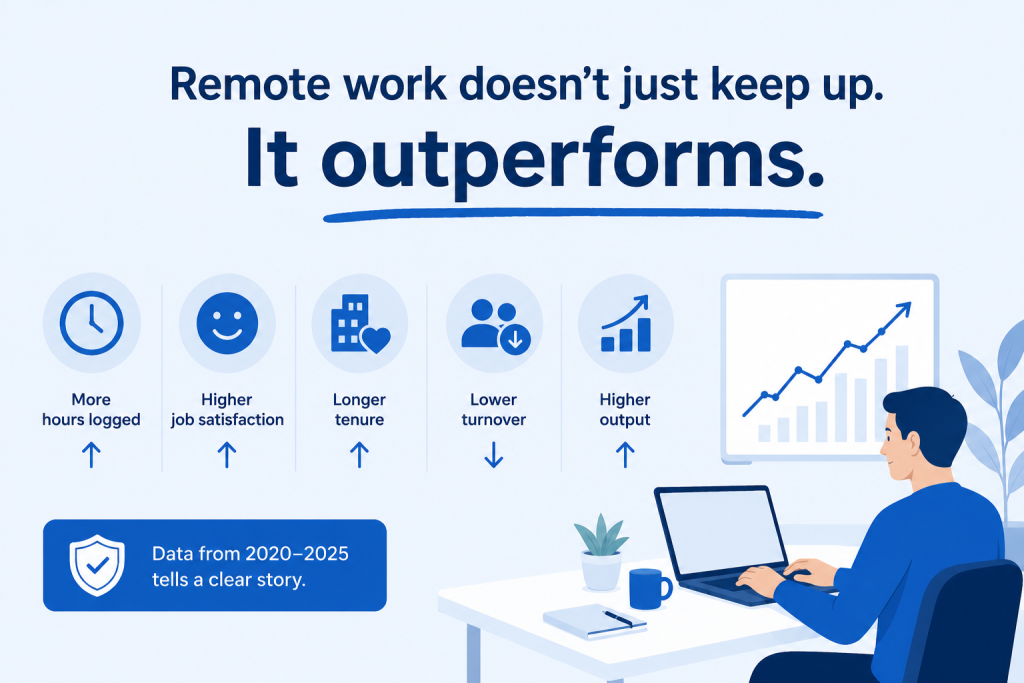
Study after study conducted between 2020 and 2025 showed that remote workers were not just equally productive. They were measurably more productive. They logged more hours. They reported higher job satisfaction. They stayed at companies longer. Turnover dropped. Output increased.
So why, with all of that evidence sitting on the table, are CEOs dragging their employees back to open plan offices and fluorescent lighting?
What Management Culture Is Actually Built On
Here is the honest answer most leadership consultants will not say publicly: a huge portion of management culture was never built around outcomes. It was built around visibility.
For decades, being seen working was the same as working. Arriving early. Staying late. Looking busy in meetings. Having your door open. These were the signals that told your manager you were a reliable employee. They had nothing to do with whether you were actually delivering results. But they mattered enormously to how you were perceived and promoted.
Remote work broke that system completely.
When everyone went home in 2020, managers suddenly had to answer a question they had never been forced to answer before. How do I actually know if someone is doing good work? Not just present, not just available, not just visible on camera. Actually delivering.
Some managers rose to that challenge. They built outcome-based frameworks. They learned how to communicate asynchronously. They discovered that trusting their team did not mean losing control, it actually meant gaining better results.
Others could not make that shift. And those are the managers, and often the executives, pushing hardest for everyone to come back.
The Real Cost of Return-to-Office Mandates
Let me tell you what I have seen happen when companies enforce return-to-office policies on teams that have been successfully working remotely.
The best people leave first. This is not speculation. It is a pattern that has played out in company after company. High performers who have options, which is exactly the kind of people every organisation wants to keep, simply go somewhere else. They find a remote role, start their own thing, or join a competitor who figured out that flexibility is now a core part of a competitive employer offer.
The people who stay are often those who feel they have fewer options. Which means the talent density of the organisation quietly drops, even as the office fills back up with warm bodies.
I have seen this happen on teams I was brought in to help manage. The return-to-office announcement goes out, three of the strongest contributors hand in their notice within the next sixty days, and the company is left scrambling to figure out why morale collapsed.
The answer is not complicated. People felt the implicit message. We do not actually trust you. And trust, once broken in that direction, is very difficult to rebuild.
What Good Remote Management Actually Looks Like
I want to be clear about something. I am not saying remote work is perfect or that every role can be done remotely. That is not the argument.
The argument is that when remote work fails, the failure is almost never because of the format. It is because of the management approach.
Early in my remote management career, I made the classic mistake. I thought being a good remote manager meant staying deeply connected to what everyone was doing at all times. Frequent check-ins. Constant status updates. Always available on messaging apps.
What I was actually doing was micromanaging from a distance. And my team felt it.
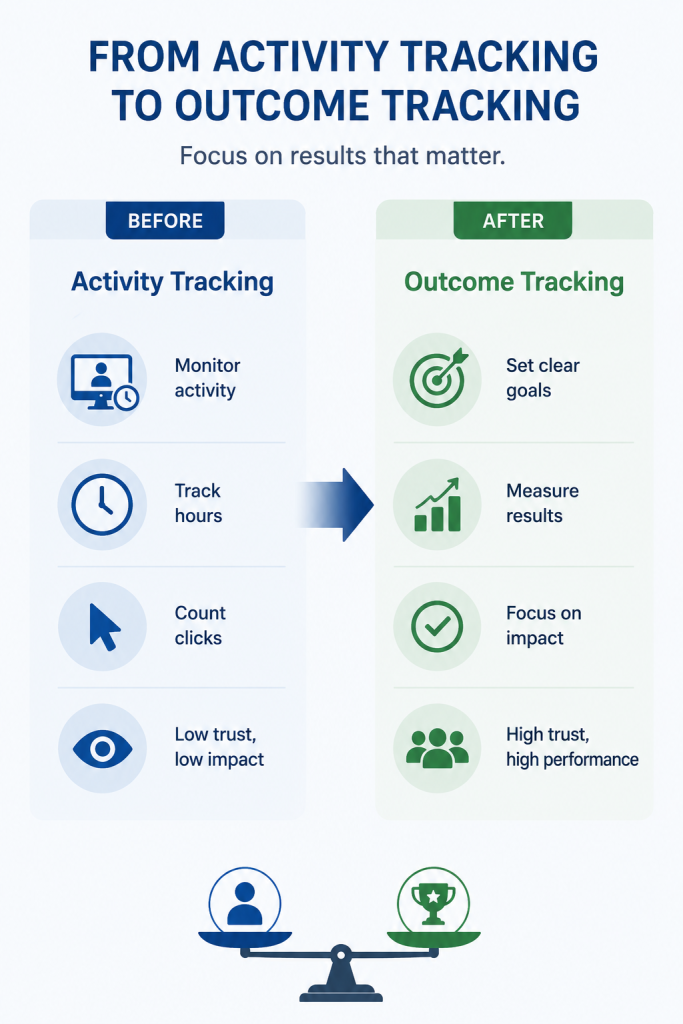
The shift that changed everything for me was moving from tracking activity to tracking outcomes. I stopped asking what are you working on today and started asking what will be done by Friday and what do you need from me to get there.
Within two months, deadlines improved. Team communication between members, without me being in the middle of everything, increased naturally. The work got better because the people had space to actually do it.
That is what good remote management looks like. It is not about watching people. It is about building systems that make great work inevitable, then trusting people to use those systems.
What This Means If You Are Looking for a Remote Job
If you are navigating the job market right now and remote work is important to you, here is what I would pay attention to.
When a company talks about remote work in their job posting, read the language carefully. Companies that understand remote work talk about async communication, outcome-based performance, documentation culture, and flexible hours. Companies that do not understand it will say things like we are remote but we expect everyone online nine to five, or we have optional in-person team days that are not really optional.
In your interviews, ask directly about how performance is measured. Ask what a great week looks like for someone in this role. Ask how decisions get made when the team is not in the same room. The answers will tell you everything.
A company that measures outcomes and trusts its people will have very clear answers to those questions. A company that is still figuring it out will give you vague, uncomfortable responses.
Your time is worth protecting. Choose accordingly.
The Bigger Picture
We are living through a genuine shift in how work gets done. It is messy, it is contested, and different companies are landing in very different places on it. That is fine. Not every company needs to be fully remote, and not every person wants to be.
What is not fine is using productivity as a cover story for what is really a desire to return to a management style that feels familiar and comfortable for leaders, regardless of what the data says or what employees actually need.
The best organisations in the next decade will be the ones that figured out how to build trust across distance. They will attract better people, retain them longer, and produce better work. Not because they gave everyone a free lunch in the office. Because they treated their people like adults.
And that, more than any office mandate, is what good leadership looks like.